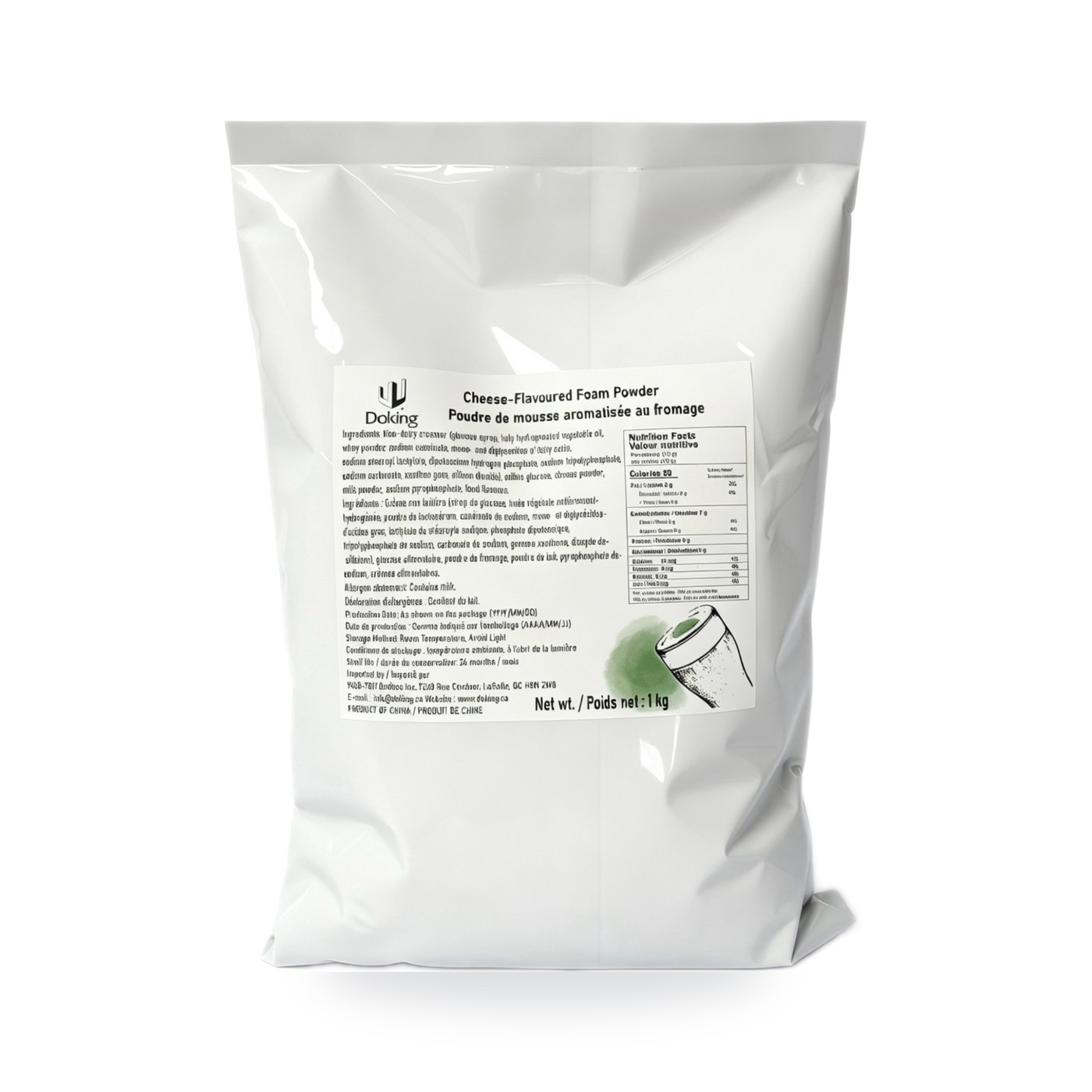
If you want a cheese foam milk cap on your menu without a daily cream-cheese station, run it from one shelf-stable SKU. Doking Cheese Form Powder is a 1 kg bag priced by the case at $26/kg in Ontario and $25/kg in Québec (the national single-unit reference is $35). You whip the powder with cold milk and a little cream into a salted, pourable foam, float it on top of any brewed tea, and charge a premium for the cap. Instead of portioning cream cheese, whipping cream, milk and salt fresh every morning and living with a short refrigerated hold, you mix the volume you need for the shift and store the bag on a dry shelf between rushes. That swap is the whole case: less labour, less spoilage, and one predictable input that tastes the same on Monday and Friday. Below is what a milk cap is, the powder method and how it holds, and why the cap earns as an upsell.
What a milk cap actually is
A milk cap, sold on most menus as cheese foam, is a thick, lightly salted dairy foam that sits on top of a cold tea rather than being stirred through it. The customer drinks the tea up through the cap, so each sip is cold tea plus a salty-sweet, creamy top. It is a texture and a finish, not a new base drink.
That distinction matters for operations. Because the cap is a topping, one foam recipe works across your whole tea range: a jasmine green, an Assam black, an oolong. You are not building a separate drink for each. You are adding a paid layer on top of tea you already brew, which is exactly what makes it an efficient upsell.
The powder method and how a batch holds
The traditional build is a station: cream cheese, whipping cream, milk and salt, portioned and whipped fresh, kept cold, and used within a short window. It tastes good, but it is four perishable inputs, daily labour, and a refrigerated batch that you either sell or throw out.
The powder method collapses that into one shelf-stable bag. The build is short:
- Measure Cheese Form Powder for the volume you expect to pour, following the mix ratio on the bag.
- Whisk or blend it with cold milk and a splash of whipping cream until it thickens to a pourable foam.
- Keep it chilled through service and re-whip or re-shake if it loosens between orders.
- Store the sealed bag on a dry shelf and mix a fresh batch next shift.
The operational win is the hold. You reconstitute what the shift needs rather than committing to a large batch made hours ahead, so the waste risk that comes with fresh dairy prep drops. The powder itself is shelf-stable, so a slow day does not spoil your inventory, it just means you mixed less. Yield per bag depends on how thick you pour your cap and your mix ratio, so test it against your own cup before you set portions.
Cream-cheese station vs one cheese powder SKU
| What you manage | Cream-cheese station | Doking Cheese Form Powder |
|---|---|---|
| Inputs to stock | Cream cheese, cream, milk, salt | One 1 kg bag (plus milk/cream on hand) |
| Daily prep | Portion and whip fresh each day | Mix per shift, on demand |
| Storage | Refrigerated, short hold | Shelf-stable bag, chill only the mixed foam |
| Spoilage risk | Whole batch if unsold | Only the volume you mixed |
| Cost to buy | Several refrigerated items | $26/kg ON, $25/kg QC, by the case |
Pricing is by-the-case and per province: $26/kg in Ontario, $25/kg in Québec, with a $35 national single-unit reference. See the Cheese Form Powder product page for the current spec.
Cheese foam as a premium upsell over a tea base
The reason to carry the cap is margin per cup, not novelty. Your customer is already ordering a tea. The cap is a paid add-on layered on top, so it lifts the ticket without adding a second drink to make. The base can be inexpensive and still read as premium once the foam is on it.
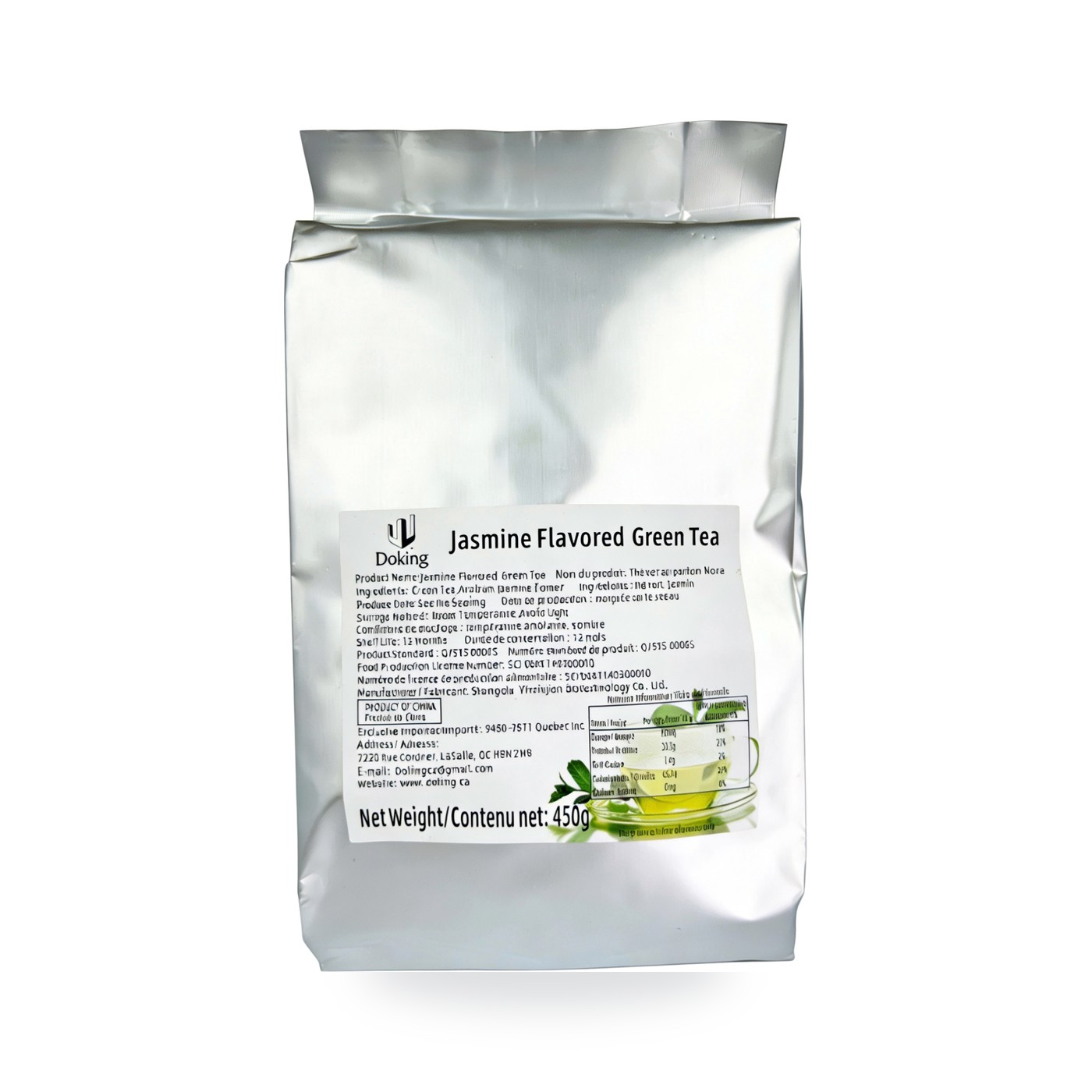
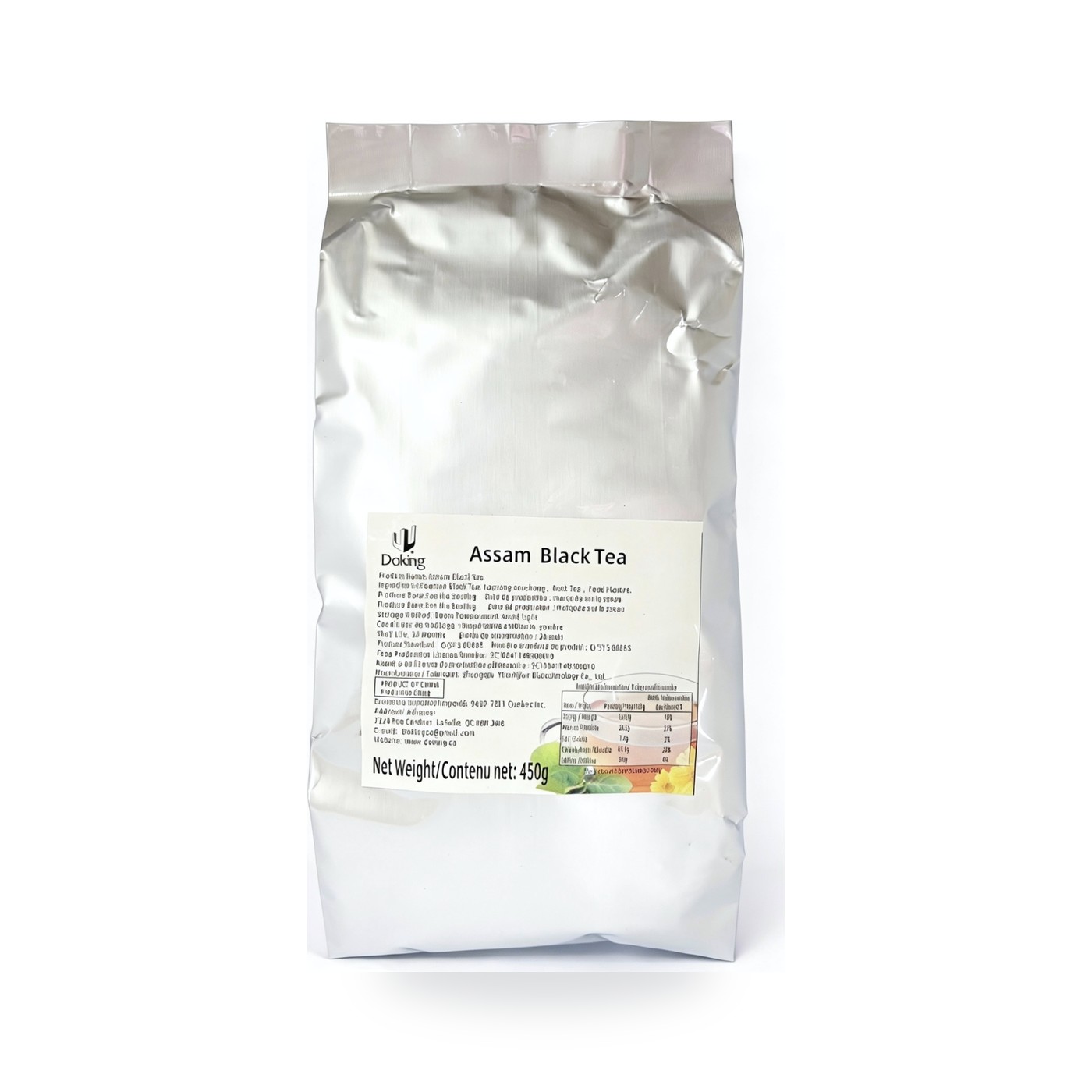
A clean pairing to launch with is a floral or malty tea under a salted cap. A jasmine green tea base at $8.95 per 450 g bag in Ontario ($8.50 in Québec) brews a lot of cups, and the salted cheese foam plays against the florals. An Assam black gives you a stronger, maltier version of the same idea. Both are cheap to brew, which means the cap upsell sits on top of an already high-margin base drink.
Practical menu moves:
- Sell the cap as an add-on, not only as a fixed signature drink, so customers can top any tea and you charge for the upgrade.
- Anchor it on your cheapest strong teas (jasmine green, Assam black) so the base cost stays low under a premium-priced cap.
- Standardize the pour once you have tested yield per bag, so every cap costs and looks the same.
Because the foam is one SKU and the tea bases are ones you already stock, you add a premium line item to the menu without adding a new station, a new perishable, or a new skill for staff to learn.
Order it
Cheese Form Powder ships by the case, shelf-stable, from our Toronto (3802 Victoria Park Ave, serving the GTA and Ontario) and Montréal (7320 Rue Cordner, serving Montréal, Laval, the South Shore and Québec) warehouses. Ask us for current by-the-case pricing for your province, or request a sample so your team can test the cap over your own tea base before you commit to a case. If you run a foodservice kitchen or a café and want the full topping and tea starter list, tell us your menu and we will put a quote together.