If you are deciding how to run taro milk tea, the short answer for most shops is powder, not fresh root. Doking’s taro milk tea powder is $8.95 per kg by the case in Ontario and $8.75 in Québec (a national retail reference of $12.75 for a single bag), and it buys you three things fresh root cannot match at a service line: near-zero prep labour, the same lavender colour in every cup, and a shelf-stable ingredient that is not exposed to produce prices or spoilage. Fresh taro can be a lovely small-batch specialty, but boiling and mashing it is real kitchen time, and cooked taro is naturally beige to grey, so the purple your customers expect is hard to hold batch to batch. Below is the powder-vs-fresh comparison, the full cup build with creamer and pearls, and why the case price is what makes the drink profitable.
Powder vs fresh root, at the service line
| Factor | Taro milk tea powder | Fresh taro root |
|---|---|---|
| Prep labour | Dissolve and blend, seconds per batch | Peel, steam or boil, mash and strain each batch |
| Colour | Consistent lavender in every cup | Naturally beige to grey once cooked |
| Batch consistency | Identical taste and colour every time | Varies by root, ripeness and how it was cooked |
| Shelf life | Shelf-stable sealed bag | Perishable produce, prep close to service |
| Skill needed | Low, any staff member can run it | Higher, and slow at a busy counter |
| Cost visibility | Fixed by-the-case price per province | Produce price moves, plus the labour behind it |
The honest case for fresh root is flavour story: a shop that wants a hand-made, made-fresh-daily identity can build a following on it. But that is a menu-positioning choice, not an efficiency one. If your goal is a fast, repeatable taro drink that tastes and looks the same on a Tuesday morning and a Saturday rush, powder is the tool built for that job.
The full cup build
Taro milk tea is a three-part drink: the taro base, a milk body, and the chew on the bottom. With powder, you are assembling, not cooking.
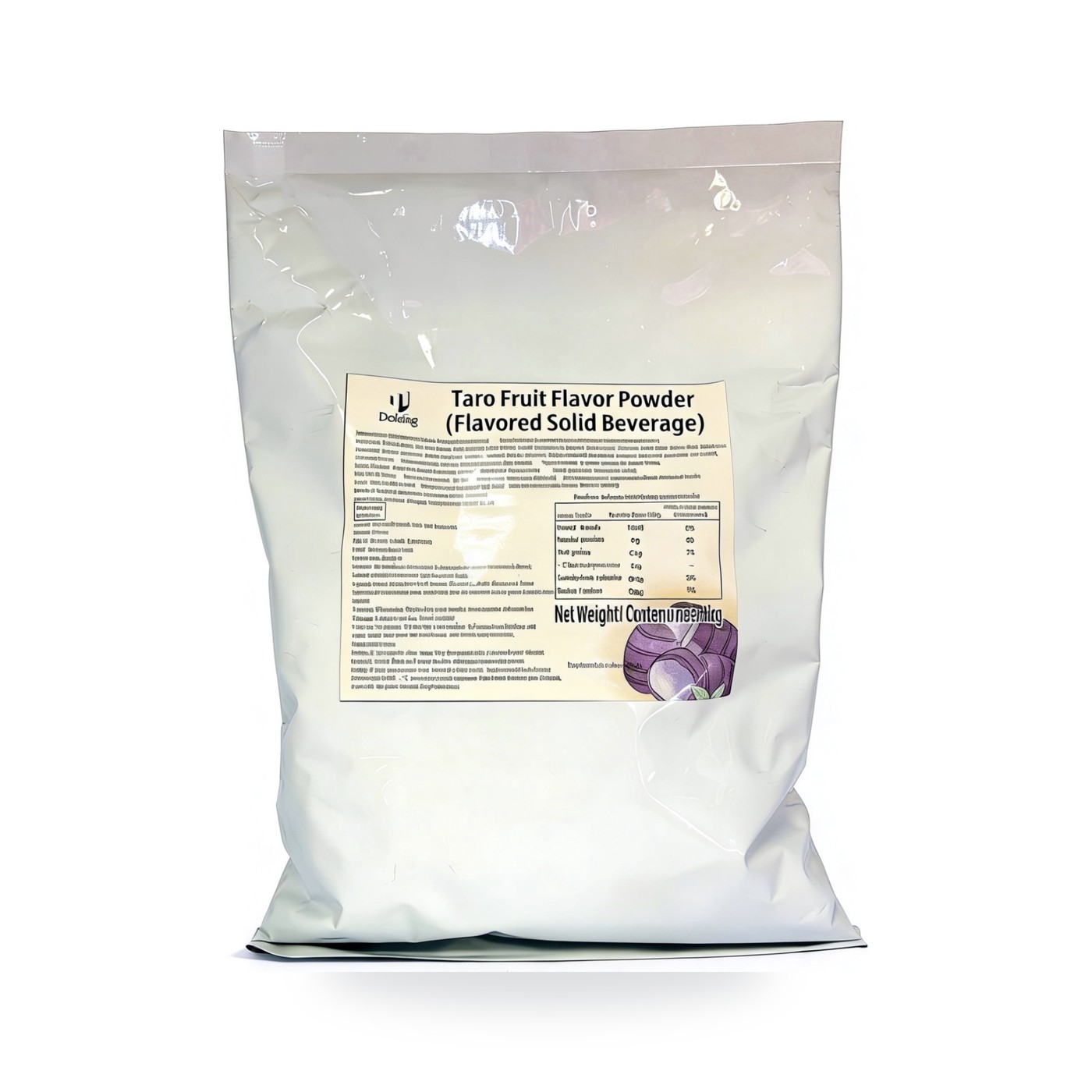
- Taro base: Taro milk tea powder, dosed to your house standard and dissolved in hot water, then chilled or built over ice. The per-cup gram dose is a house decision, so set it once for the strength and creaminess you want and keep it fixed.
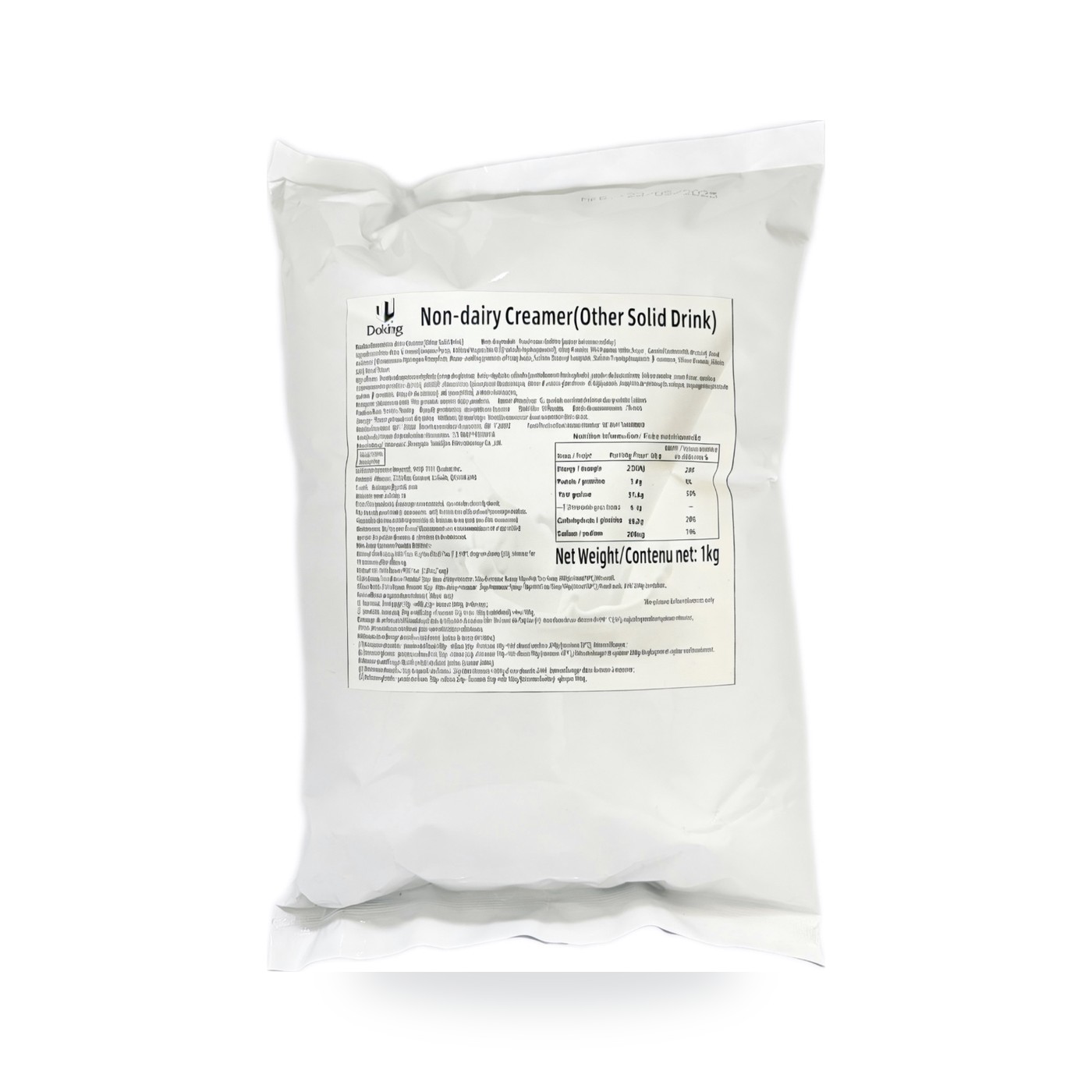
- Milk body: Non-dairy creamer for a smooth, stable body that will not split. Doking’s pearl milk tea card uses about 70 ml of milk base in a 500 ml cup as a reference point for creaminess you can start from.
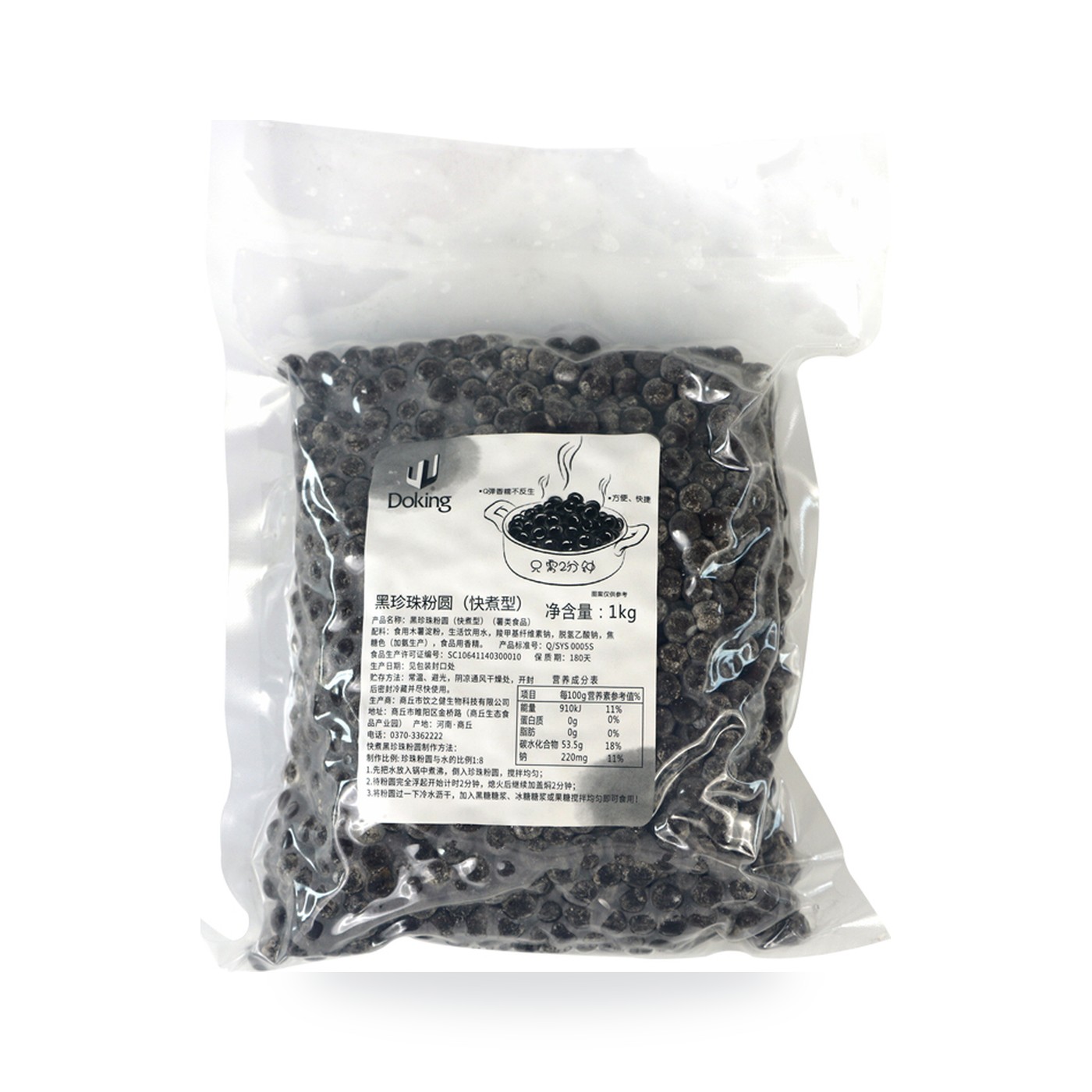
- The chew: cooked black tapioca pearls, about 80 g per 500 ml cup on Doking’s standard card, added last.
Build the base and milk over ice, stir or shake to combine, then top with fresh pearls. Because the powder already carries the taro flavour and the colour, the only variable you are managing is your dose, which is exactly what makes the drink easy to standardize across staff.
The case-cost case for powder
Every argument for powder ends at the case price, because that is where the margin lives. Taro milk tea powder is a single 1 kg bag at a national retail reference of $12.75, but by the case it is $8.95 per kg in Ontario and $8.75 in Québec. That is close to a 30% saving per kg on the identical powder, and it is the number your per-cup cost is built on.
How many cups a kilo yields depends on your dose, so your true cost per cup follows once you fix that dose against your cup size. The two ingredients that finish the drink follow the same case logic:
- Non-dairy creamer: $7.95 per kg in Ontario, $7.75 in Québec, against a $12.75 single-bag reference.
- Black tapioca pearls: $3.75 per kg in Ontario, $3.50 in Québec, against a $6.50 single-bag reference, roughly half the retail cost for the same pearl.
By-the-case wholesale prices are set per province (Ontario and Québec). The single-unit price is a national retail reference, useful mainly to show what the case saves you. Fresh taro, by contrast, is produce: its price moves with the market, and you still pay the labour to turn it into a drink. Powder converts all of that into one fixed, plannable line on your cost sheet.
Order the taro drink by the case
To run taro milk tea you need three shelf-stable Doking ingredients, all sold by the case: taro milk tea powder, non-dairy creamer, and black tapioca pearls. The creamer and pearls also carry most of your other milk teas, so one order covers a big part of the menu. We stock all three by the case in Toronto (Ontario) and Montréal (Québec), with local delivery and samples so you can dial in your dose before committing. Ask us for current by-the-case pricing for your province, and we will send samples to your foodservice location.